Book Appointments with Trusted Specialist Doctors Near You
Get effective relief from lipomas (benign fatty lumps) with safe and advanced treatment options. Our minimally invasive procedures ensure precise removal, minimal scarring, faster recovery, and long-lasting results—helping you feel comfortable and confident again.


About
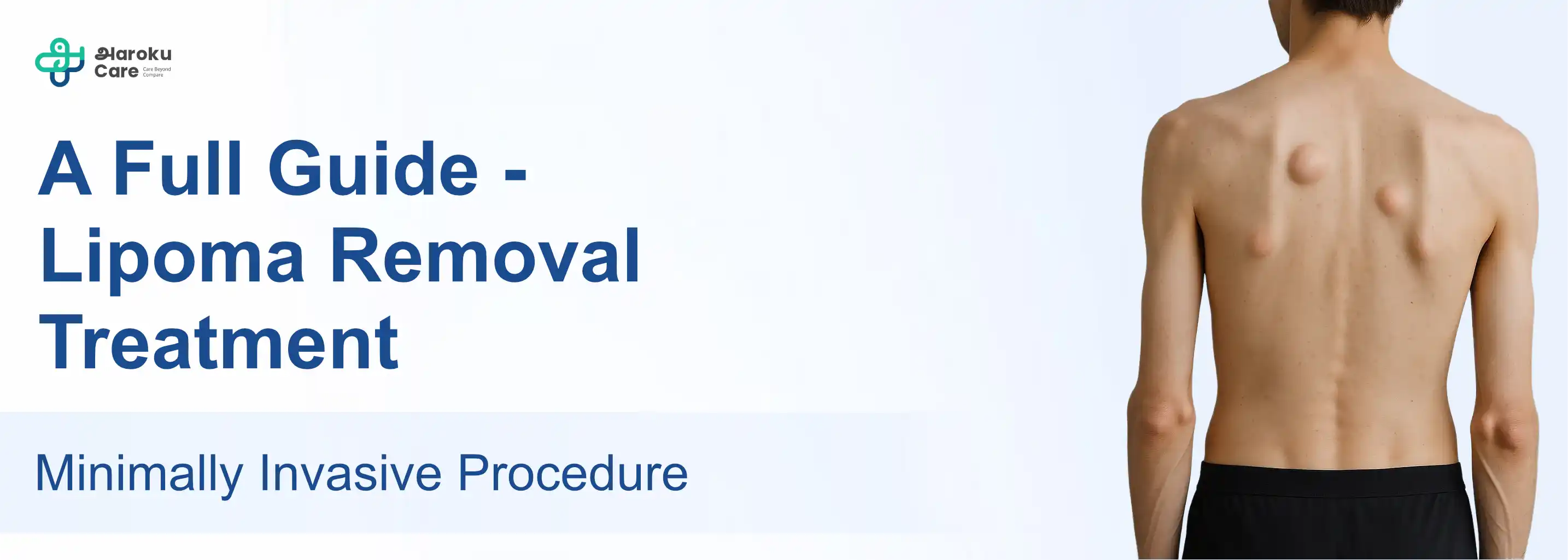
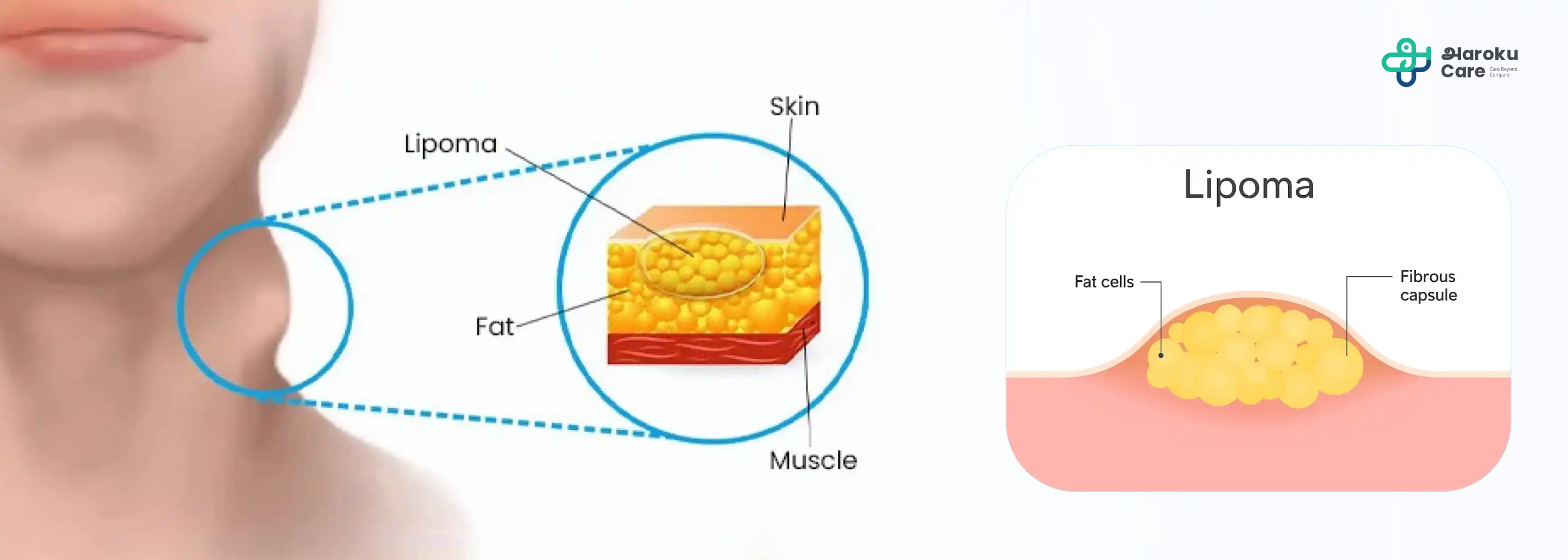
A lipoma is a soft, slow-growing lump that develops under the skin due to an overgrowth of fat cells. It is a benign (non-cancerous) condition and is usually harmless. Lipomas commonly occur on the neck, shoulders, back, arms, or thighs.
These lumps are typically painless, movable, and feel doughy to touch. In most cases, they do not require treatment unless they grow larger, cause discomfort, restrict movement, or affect appearance. Treatment focuses on safe removal of the lipoma, usually through minor surgical or minimally invasive procedures, ensuring minimal scarring and low chances of recurrence.
Symptoms
Lipomas usually grow slowly and are often painless, but in some cases they can cause discomfort or concern as they increase in size. Early signs should not be ignored, especially if the lump changes over time.
Watch out for these symptoms:
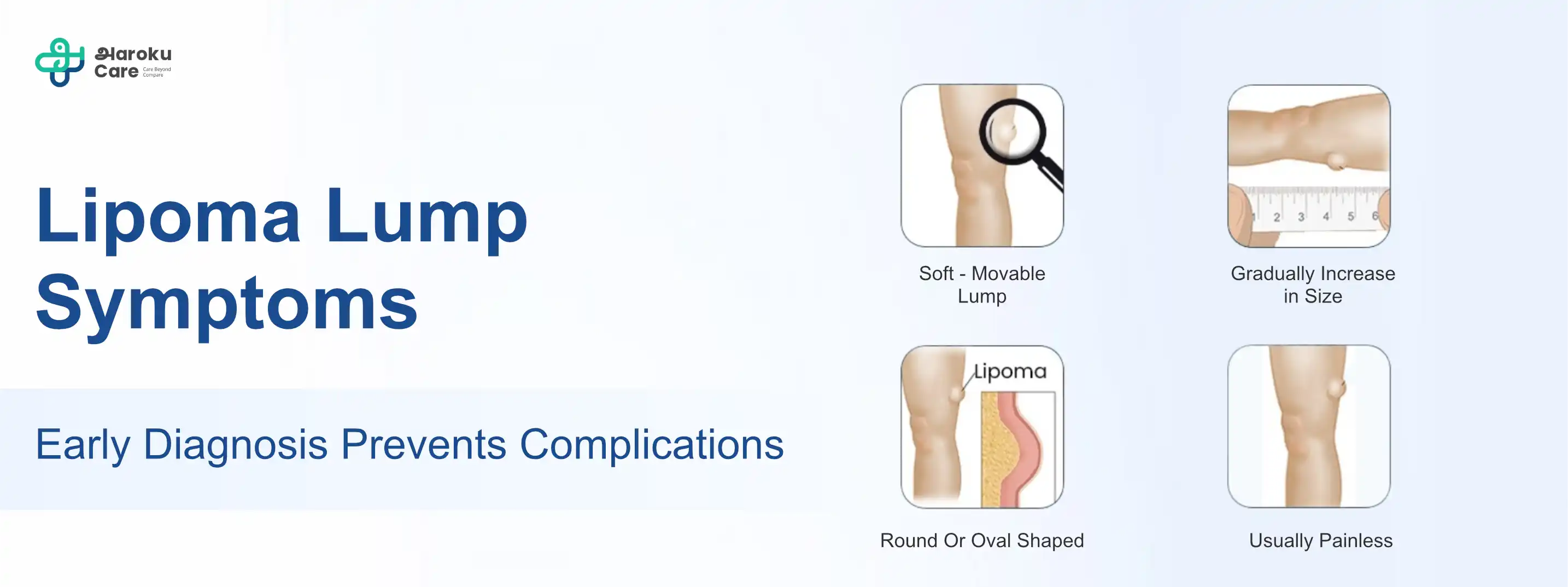
A soft, movable lump under the skin
A lump that gradually increases in size
Mild pain or tenderness (in some cases)
Discomfort if the lipoma presses on nearby nerves or tissues
Cosmetic concerns due to visible swelling
These symptoms may indicate a lipoma that requires medical evaluation and appropriate treatment.
Diagnosis
Lipomas are usually easy to identify because of their soft texture, smooth surface, and ability to move under the skin. In most cases, doctors can diagnose a lipoma through a physical examination along with a review of your medical history.
However, since some other conditions can look similar—such as cysts, neurofibromas, or, rarely, liposarcomas—further evaluation may sometimes be needed to confirm the diagnosis.
Imaging Tests:
If required, imaging tests like ultrasound, MRI, or CT scans may be recommended. These help determine the exact size, depth, and location of the lipoma, and check how it relates to nearby tissues.
Biopsy:
In cases where there is any doubt about the nature of the lump, a biopsy may be performed. This involves taking a small sample of tissue and examining it under a microscope to ensure the growth is benign.
Not every lipoma requires additional testing. The need for these tests depends on factors such as the size of the lump, how quickly it is growing, and whether it is causing symptoms.
EMI Consultation
Treatment Options
At Aaroku Care, lipoma treatment is personalized based on the size, location, symptoms, and patient preferences. In many cases, lipomas do not require immediate removal unless they cause discomfort, grow in size, or affect appearance. The following treatment options are commonly recommended:
Observation (Watchful Waiting):
If the lipoma is small, painless, and not causing any cosmetic or functional concerns, doctors may recommend monitoring it over time. Since lipomas are benign and slow-growing, they can often be left untreated unless changes occur.
Steroid Injections:
This non-surgical option may be used to reduce the size of the lipoma and relieve mild discomfort. While it can help shrink the lump, it may not completely remove it and often requires multiple sessions.
Liposuction:
Liposuction is a minimally invasive procedure suitable for smaller lipomas. It involves using a thin tube (cannula) to suction out the fatty tissue through a small incision, resulting in minimal scarring and quicker recovery.
Surgical Excision:
Surgical removal is the most effective and commonly preferred treatment for lipomas. This procedure involves making a small incision, removing the lump completely, and closing the area with sutures. It ensures complete removal with a low chance of recurrence.
The choice of treatment depends on the characteristics of the lipoma and the patient’s needs. At Aaroku Care, our specialists ensure safe, effective, and minimally invasive treatment approaches for the best possible outcomes.
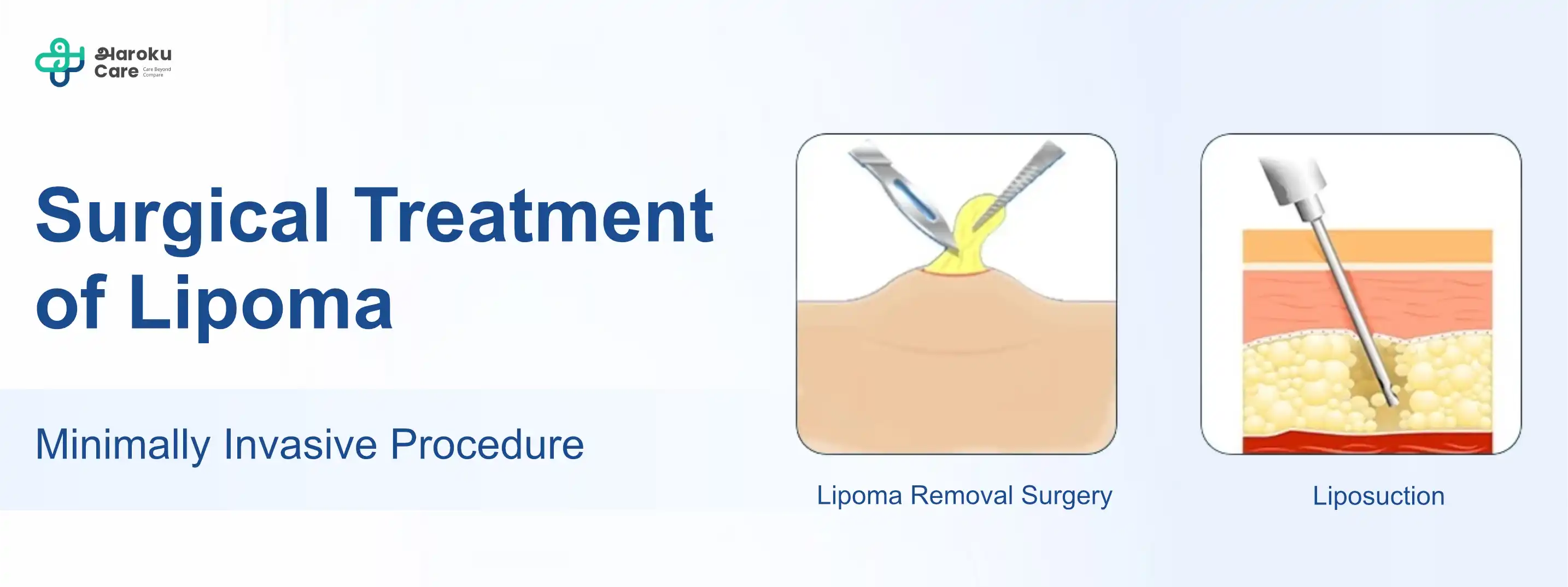
Lipoma removal surgery, also known as lipoma excision, is the most effective and commonly recommended treatment for removing fatty lumps. At Aaroku Care, advanced surgical techniques are used to ensure safe removal, minimal discomfort, and faster recovery. Most procedures are performed on an outpatient basis, allowing patients to return home the same day.
At Aaroku Care, the choice of surgical technique depends on the size, location, and complexity of the lipoma. Common approaches include:
Conventional Excision:
This is the most widely used method for lipoma removal. It involves making a small incision over the lump, carefully separating it from surrounding tissues, and removing it completely. The incision is then closed with sutures. This procedure is typically performed under local anesthesia and offers a low risk of recurrence.
Minimal Excision Technique:
This approach uses a smaller incision to remove the lipoma. The lump is gently extracted using specialized instruments, resulting in minimal scarring. It is best suited for smaller lipomas and offers quicker healing.
Endoscopic Removal:
For lipomas located in sensitive or hard-to-reach areas, a minimally invasive endoscopic technique may be used. A thin tube with a camera (endoscope) helps guide the removal through small incisions. This method ensures precision and reduces visible scarring.
Liposuction-Assisted Removal:
In certain cases, liposuction may be used either alone or alongside excision. A thin cannula is inserted through a small incision to suction out the fatty tissue. This technique is ideal for smaller or softer lipomas and provides a less invasive alternative.
The most suitable procedure is determined after a thorough evaluation by Aaroku Care specialists, ensuring personalized treatment with optimal cosmetic and medical outcomes.
Not Sure Which Treatment is Right for You?
You don’t have to decide alone. Our experts are here to guide you and recommend the best treatment based on your condition.
A simple, safe procedure designed for quick recovery
Lipoma removal is a safe and minimally invasive procedure, usually performed on an outpatient basis. The steps typically include:
Anesthesia: The area is numbed using local anesthesia. For larger lipomas, regional or general anesthesia may be used for better comfort.
Small Incision: A small cut is made over the lipoma to access the fatty tissue.
Fat Removal: Advanced techniques such as liposuction or energy-based methods may be used to break down and remove the fat.
Complete Excision: Any remaining tissue is carefully removed to reduce the chances of recurrence.
Healing: The incision is closed or allowed to heal naturally, resulting in minimal or no visible scarring.
The entire procedure is quick, precise, and designed to ensure minimal discomfort with faster recovery.
Lipoma removal surgery offers effective relief and improved comfort, especially when the lump causes symptoms or cosmetic concerns.
Relieves Discomfort: Eliminates pain, pressure, and movement restriction
Enhances Appearance: Removes visible lumps and improves confidence
Prevents Complications: Avoids nerve compression or inflammation
Provides Reassurance: Confirms the lump is non-cancerous
At Aaroku Care, procedures are safe, minimally invasive, and focused on quick recovery.
Recovery after lipoma removal usually takes about 2 to 4 days, depending on the procedure and individual healing. Most patients are discharged the same day after a short observation period.
Mild pain, swelling, or bruising may occur in the first few days but gradually improves. Most people can return to normal activities within a short time.
Quick Recovery Tips:
Keep the area clean and dry
Avoid swimming or soaking the wound
Change dressings as advised
Use ice packs to reduce swelling
Avoid heavy activities until approved
Attend follow-up visits
Following these steps helps ensure a smooth and faster recovery.
Choosing the right care ensures safe treatment, accurate diagnosis, and long-term prevention.
Expert Doctors with proven experience
Minimally Invasive Techniques for less pain & scarring
Same-Day Discharge for quick recovery
Personalized Treatment Plans
Complete Care Support from consultation to follow-up


FAQ
Is lipoma removal necessary?

Yes, Lipoma removal may be necessary before it grows larger or causes complications.
Is lipoma surgery painful?
How long does it take to recover?
Can lipomas come back after removal?
Is EMI or Insurance available for Lipoma Removal Surgery?
*Treatment results may vary for each patient. By submitting the form or contacting us, you consent to receive updates and communication from Aaroku Care.